BRAND & SENSORY DESIGN / 5 min read
Why Saffron Flavor Deserves More Attention Than Color
A light-looking saffron drink can surprise the palate. Here is why honest sensory storytelling matters for a premium everyday brand.
 AN EDITORIAL PERSPECTIVE / NUSHAVIRA
Color is only one part of the story
In food and beverage marketing, strong colors can be visually compelling, but they are not a reliable substitute for flavor. A saffron drink may have a gentle hue and still be perceived as intensely saffron-forward. How it tastes matters more than how dramatic a staged photograph appears.
Saffron chemistry also reminds us that color, bitterness and aroma have different contributors: crocins are associated with color, picrocrocin with bitter notes and safranal with characteristic aroma. Those observations concern saffron chemistry in general; they do not measure the composition or potency of NUSHAVIRA. When a brand promises a vivid orange cup but delivers a lighter drink, it risks disappointing customers before they notice the product’s actual strengths.
Photograph the experience, not an exaggeration
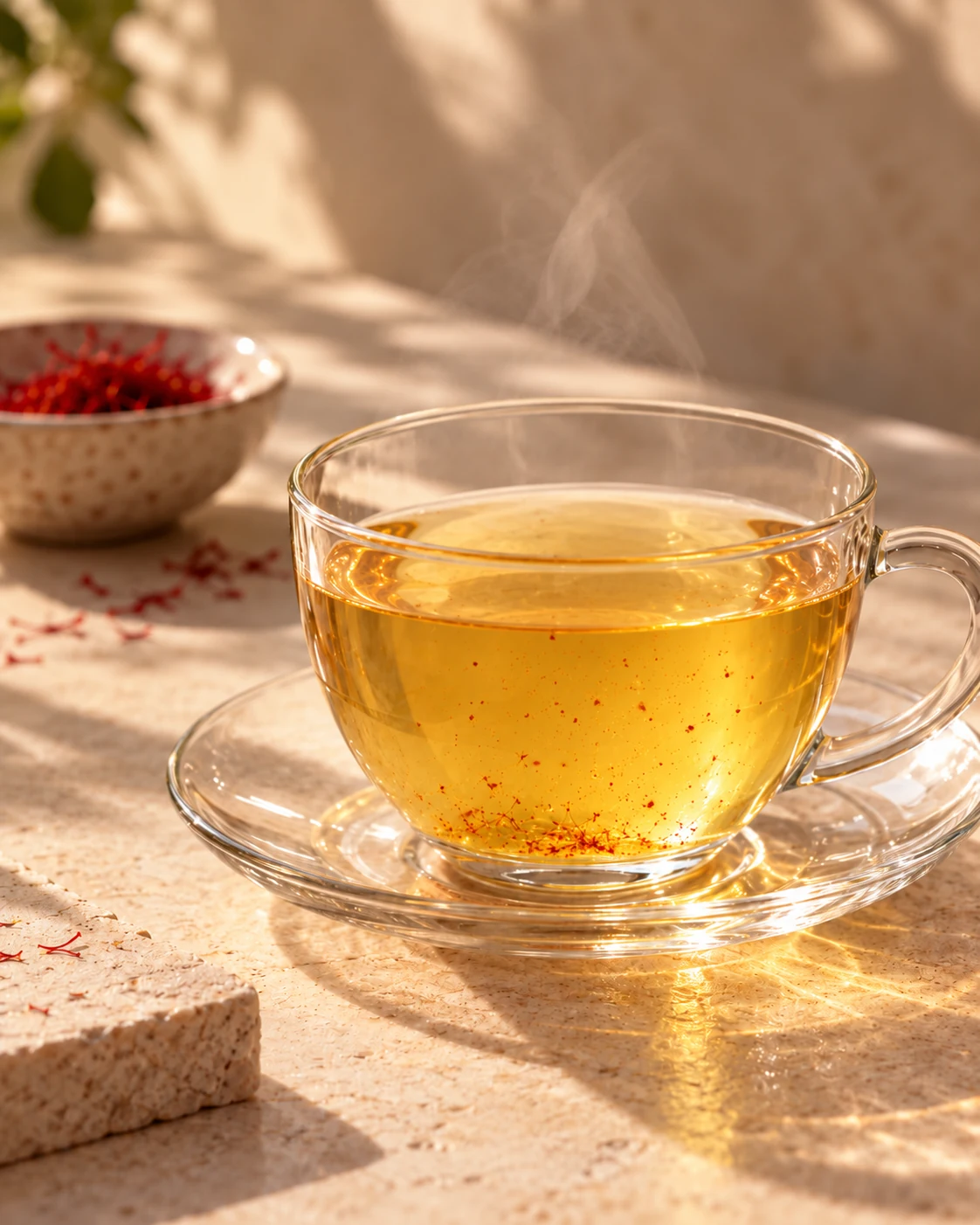
For NUSHAVIRA, the visual brief should start with the real preparation sequence. The dry mix enters an empty cup. Water is poured from slightly above. The blend disperses, and fine, short saffron fragments become visible in the drink. The images should show these particles at a realistic scale.
Close-up photography, transparent glassware and controlled natural light can communicate quality without enlarging threads or saturating the liquid. Authentic proportions make the story more credible to both consumers and professional buyers.
Make sweetness part of the promise
When sugar is an ingredient, the website should tell customers. Phrases such as “sweetened saffron drink mix” are clearer than descriptions that suggest a sugar-free infusion. A product can be positioned as a refined daily indulgence while remaining honest about its composition.
This clarity also helps distributors identify the correct target audience. Buyers looking for an unsweetened ingredient or an industrial extract have different requirements from customers purchasing a ready-to-prepare beverage.
Build loyalty through repeatable experience
A beautiful photograph can attract interest once; a satisfying cup creates the possibility of repeat purchase. Consistency of serving size, aroma, sweetness, fine-particle visibility and package instructions should therefore become part of the commercial quality discussion.
The most persuasive message may be the simplest: subtle in color, bold in saffron flavor. It is memorable precisely because it can be checked by anyone who prepares the drink.
SOURCES & FURTHER READING
For a closer look.
These references provide scientific context, not laboratory verification of this finished product.
- Chemical Composition and Sensory Evaluation of Saffron ↗Study discussing crocins, picrocrocin, safranal and sensory characteristics of saffron.
- The Relation between Drying Conditions and the Development of Volatile Compounds in Saffron ↗Review of saffron aroma-related compounds and processing; not evidence for this commercial beverage.